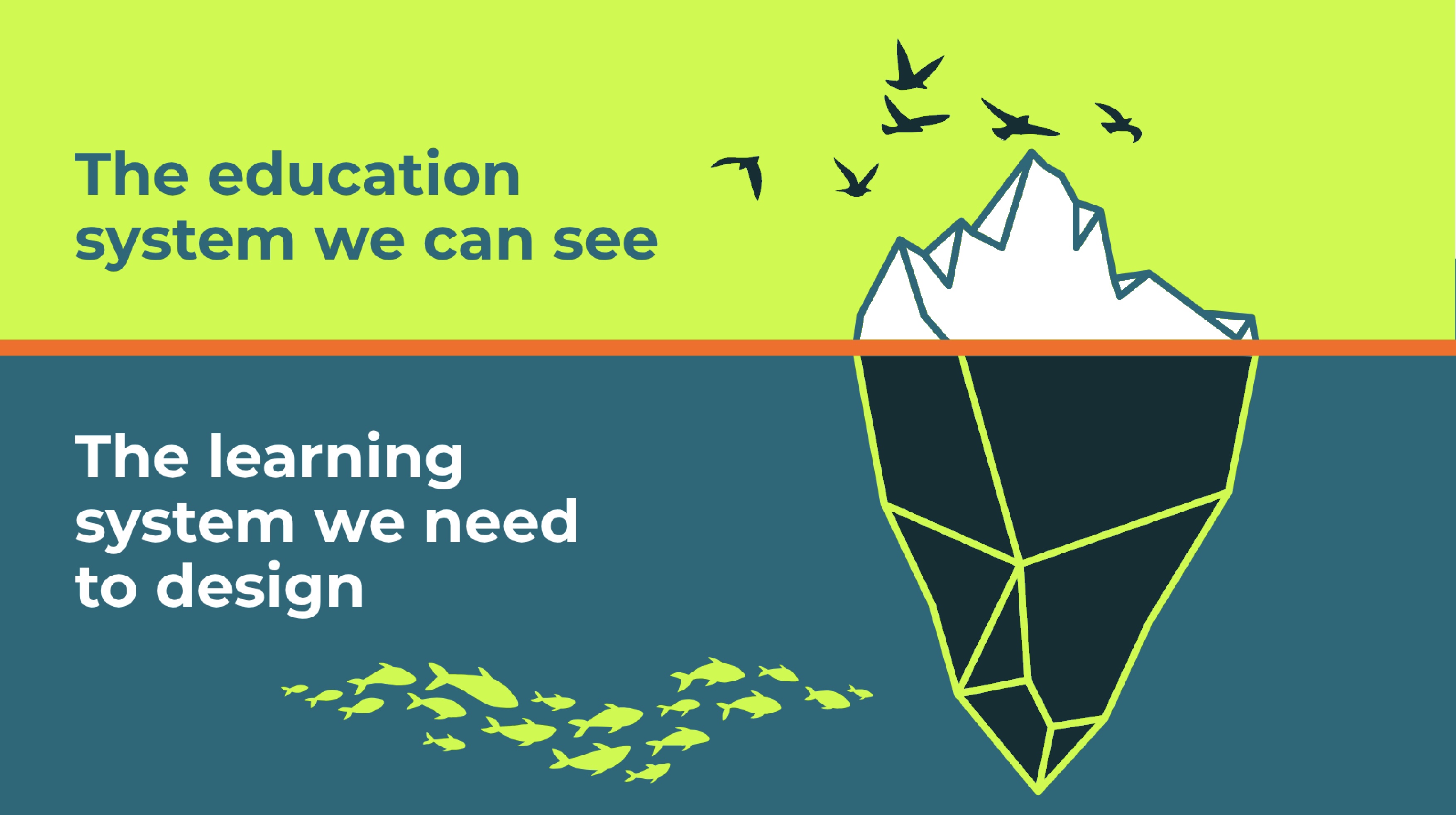
Education is an Iceberg. Are We Looking Below the Waterline?
The election is over. Across the manifestos, there were proposals on apprenticeships, additional educational needs, childcare, school buildings, curriculum and university funding. These are important questions, and they deserve answers.
But I wonder whether we are still looking mainly at the part of the education iceberg we can see: schools, teachers, qualifications, buildings, funding and exams.
Below the waterline sits a bigger question. What kind of learning system does the Isle of Man need for the next 10 to 15 years?
Improving the system we have matters. So does asking whether it is the system we will need.
The questions below the waterline
Much of the education debate focuses, understandably, on immediate pressures. Do we have enough teachers? Which schools need investment? How should we support children with additional needs? What qualifications and apprenticeships should we offer?
Underneath those questions are others that could shape the Island’s future:
- What should a young person leaving education in 2040 know and be capable of doing?
- How will AI change what is worth learning and which human capabilities matter most?
- How can education respond to the changing needs of our economy?
- How do we make lifelong learning practical for people whose work may change several times?
- How might the educator’s role evolve when information is available almost instantly?
These questions invite us to think beyond individual fixes and consider how learning could work across a lifetime.
Could a school be more than a school?
Across the Island, we already have educational buildings, sports spaces, technology and community facilities. They serve children during the school day. Outside those hours, there may be opportunities to make more use of them.
What more could these public assets offer families and communities?
Imagine some schools gradually becoming regional learning hubs. Children would still learn there during the day. After-school activities and childcare could extend the day for families who need them. Employers could contribute to skills programmes and experiences of work. Adults could learn digital, AI, financial or vocational skills in the evening. Community groups and entrepreneurs could use the spaces too.
UCM already offers adult learning through evening, flexible and self-paced provision. Could that expertise reach more people through a wider network of learning spaces around the Island?
The institution does not necessarily have to move. Learning can.
Childcare is economic infrastructure too
Childcare and education are often discussed as separate policy issues. For families, they meet every day. The gap between the school day and the working day can create cost, complexity and stress.
Government need not deliver every activity itself. Schools could provide space while businesses, charities, social enterprises, sports organisations and other providers deliver programmes within an appropriate framework for quality and safeguarding.
Better before-school, after-school and holiday provision could give children richer experiences, make working life more manageable for parents and create opportunities for local providers. It is a question for education, family life and the economy at the same time.
Learning cannot end at eighteen
Our familiar picture of education is a straight line: school, then college or university, then work. Many people’s lives already look different. They learn, work, change direction, build new capabilities and return to learning.
For a small island, that presents an opportunity. Schools, UCM, employers and community organisations could be more closely connected, making it easier for people to learn at different stages of life.
We could test the idea in one area. Bring its schools, parents, employers, community groups and UCM together. Try extended provision and bring adult learning closer to where people live. Measure what people use, what improves access and what makes a difference. Then adapt it before extending it elsewhere.
And then there is AI
AI is the part of the iceberg moving fastest. It is more than another subject to add to a crowded curriculum. It raises a difficult question: when access to information and powerful tools becomes easier, what is education for?
Knowledge still matters. So do the abilities to question, reason, judge, create and collaborate. Young people need to learn when AI can strengthen their work and when they need to do the thinking themselves.
There is a difference between using AI to improve a piece of homework and using it to improve the learner. A better finished answer does not necessarily mean that more learning has taken place.
Our aim should be to develop capable people who can work intelligently with AI while strengthening their own judgement. Educators will be central to that. Their work as learning designers, coaches, mentors and guides may become more valuable as the tools change.
A different conversation for the next administration
The election brought forward proposals for improving education. The opportunity now is to ask a deeper question:
If we were designing a learning system for an Island that wants its people to flourish in 2040, what would we create?
What would we keep, change or stop? How could we use the assets we already own? How could we connect learning with families, communities and the economy? What should every young person leave education able to do? And how could people return to learning throughout their lives?
There is much that is good about education on the Isle of Man, and many talented people working within it. They should be part of this conversation.
If we focus only on improving what is visible today, we may miss the chance to prepare for what is coming. It is time to look below the waterline and explore what an Island-wide learning system could become.
I write this in a personal capacity, informed by my experience across education, business and leadership. The views expressed are my own and not those of any organisation on whose board or governing body I serve.